


10 BTO Interior Design Tips for Small Spaces in Singapore
Designing a BTO flat in Singapore comes with a unique set of challenges. Space is often limited, layouts can feel compact, and every design decision needs to work harder. At the same time, homeowners still want their home to feel comfortable, stylish, and practical for daily life.
The good news is that a smaller home does not have to feel cramped. With the right design approach, even a compact BTO flat can feel open, efficient, and well put together. The key is to make thoughtful choices that improve flow, reduce clutter, and support the way you actually live.
From storage planning to furniture selection, these tips can help you create a home that feels more spacious without sacrificing comfort. If you are also looking for a broader approach to BTO house design, it helps to start with the basics that make small-space living work better.
1. Start With a Layout That Matches Your Daily Routine
The worst thing you can do in a small space is design based on style. With a BTO flat, the most important consideration is the layout because how you navigate through the space is how you experience the space.
Instead of focusing on finishes and furniture, start with how you’ll use the spaces. Do you work from home often? Do you need more dining or storage? Do you want a social or more private space?
A layout that matches your lifestyle will make the home more livable. Function should be prioritised over form, for a beautiful home that you can actually live in.
2. Use Built-In Storage Without Overloading the Space
Storage is important in any home, but in a small BTO flat, too much built-in carpentry can make rooms feel tight and visually heavy. The goal is not to add storage everywhere. The goal is to place it where it actually solves a problem.
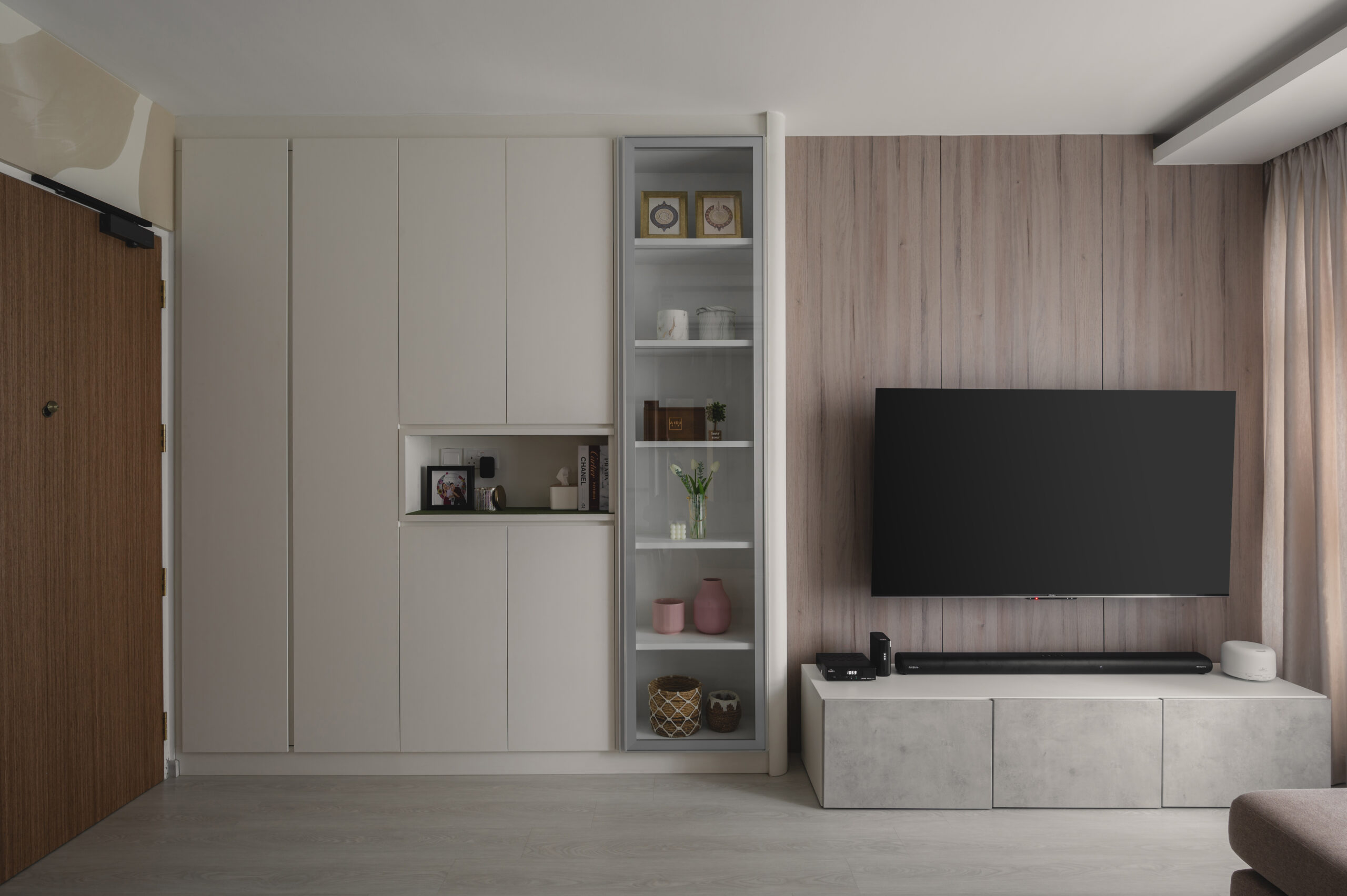
Focus on the areas that benefit most from custom storage, such as the entryway, bedroom wardrobes, or living room TV wall. Keep the design clean and avoid unnecessary compartments or bulky detailing that can make the space feel crowded.
Well-planned storage should help the home feel calmer, not more enclosed.
3. Choose Light and Consistent Finishes
In small homes, too many contrasting materials and colors can break up the space and make it feel more fragmented. A more consistent material palette helps the home feel smoother and more open.
This does not mean everything has to be white, but lighter finishes often work well in compact interiors. Soft neutrals, warm wood tones, and understated textures can brighten the home while keeping it visually cohesive.
When materials flow naturally from one area to another, the entire flat tends to feel more spacious and less busy.
4. Make Multi-Functional Furniture Work Harder
In a small BTO, furniture should be multifunctional. It’s an easy way to make the space more functional without being cluttered.
Storage in a dining bench, drawers in a bed frame, a folding dining table, a day bed for guests – these are all ways to maximise a small space. Just be sure to select furniture that fits your needs, rather than multifunctional furniture for the sake of it.
When you make more informed choices, your home will be more mindful and livable.
5. Keep Walkways Clear and Furniture Proportions Balanced
Even with a beautiful interior design, a home can feel smaller if furniture is too large or not well spaced. In small BTO apartments, space matters. You want to be able to navigate the space easily.
Select appropriately scaled furniture. Narrower dining tables, narrower sofas, and furniture that doesn’t look too bulky are often better choices than furniture that is created for a bigger house. Don’t overcrowd the room to fill gaps.
Too much furniture can make the home feel cluttered.
6. Let Natural Light Do More of the Work
Natural light can completely change how a small home feels. A brighter room tends to feel larger, fresher, and more inviting. That is why it is important to let natural light move through the flat as much as possible.
Avoid blocking windows with heavy curtains, oversized furniture, or dark partitions unless they are truly necessary. Sheer curtains, lighter wall colors, and reflective finishes can all help brighten the space without making it feel harsh.
If the flat does not receive much daylight, use warm layered lighting to create a softer and more open atmosphere.
7. Create Zones Without Closing Off the Home
Many BTO flats have an open-plan living and dining space, which can be beneficial with good design. Rather than dividing the room completely, use smaller elements to separate different areas of the home to allow purpose, but keep it looking open.
This may be achieved with furniture, lighting, shelving, or a slight texture change. A dining lamp can help section off the dining room, and a rug can delineate the living room.
Creating a balance in this way allows the flat to feel organised without being cramped.
8. Use Vertical Space Wisely
When floor area is limited, vertical space becomes much more valuable. Tall storage, wall-mounted shelves, and elevated cabinetry can help you gain storage without taking up more room on the ground.
That said, balance is important. Filling every wall with overhead storage can make the flat feel top-heavy and enclosed. Use vertical storage where it makes sense, such as in the kitchen, service yard, or bedroom, and keep the design visually clean.
A well-balanced approach gives you function without making the room feel too compressed.
9. Keep the Kitchen and Dining Area Visually Light
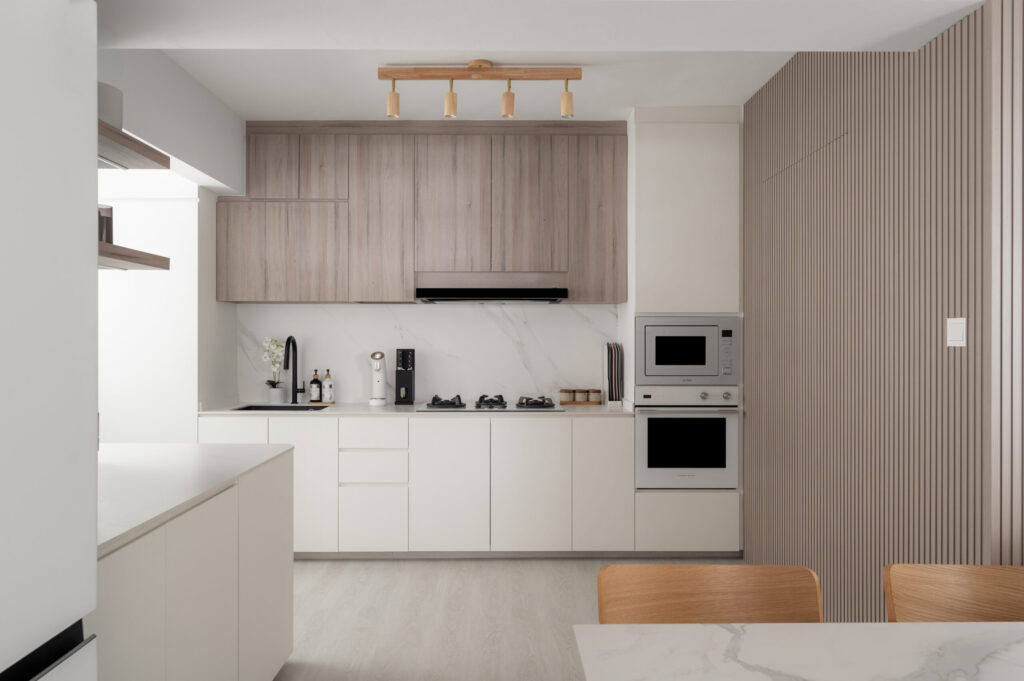
In many BTO homes, the kitchen and dining area are a large part of the living area of the home. A large, bulky, and over-accessorised area can impact how open the home feels.
Minimal cabinetry, long and low dining furniture, and neutral materials are all important. If the kitchen is open to the living room, it’s especially important. A simple and less cluttered kitchen can make the whole house seem neater.
More is not always better. Sometimes, a more straightforward layout will be more convenient.
10. Choose a Design Direction That Fits Small-Space Living
Not every design style works equally well in compact BTO flats. Some styles rely on heavier visual layering, bold feature elements, or large decorative furniture that can quickly overwhelm a smaller home.
A more restrained design direction usually works better because it helps the space breathe. This is one reason thoughtful BTO house design matters so much. The best results come from balancing style with function, so the home feels beautiful but still easy to live in.
The goal is not to make the flat look empty. It is to make it feel well considered, practical, and comfortable over the long term.
Common Mistakes to Avoid in Small BTO Flats
Even with good intentions, some design choices can make a small flat feel more cramped than it needs to be.
Overdesigning every room
Not every wall needs a feature treatment, and not every corner needs furniture. Too much going on can make the home feel visually crowded.
Adding too much carpentry
Storage is useful, but excessive built-ins can make rooms feel boxed in. Focus on what is truly necessary.
Choosing furniture that is too large
A spacious-looking home often comes down to scale. Furniture that is too deep, too wide, or too bulky can disrupt movement and make rooms feel smaller.
Ignoring daily habits
A home may look stylish on paper, but if the layout does not support your routine, it will not feel comfortable to live in.
Final Thoughts
When designing a small BTO flat, it’s not about fitting more in. It is about doing things that enhance efficiency, comfort, and convenience. With proper planning of layout, storage, and materiality, a small home can be surprisingly welcoming.
Great small-space designs are not just pretty. They are also comfortable to live in. By prioritising the essentials, you can design a home that is peaceful, functional, and well-suited to your lifestyle.
If you are planning your own renovation and want a more complete approach to BTO house design, it helps to work from a design strategy that balances function, style, and long-term livability.


